
Why Those White Bumps Appear on Your Skin
- Tiny hard white bumps on the face, especially around the eyes, cheeks, nose, or forehead, may be milia.
- Milia are small keratin-filled cysts under the skin, not traditional pimples or whiteheads.
- They are usually harmless, but they can be stubborn. Picking, squeezing, or trying to dig them out at home can irritate the skin and increase the risk of marks or scarring.
What Are Milia?
Milia are small, firm bumps that form when keratin becomes trapped under the surface of the skin. Keratin is a natural protein found in the skin, hair, and nails, but when it gets enclosed beneath the skin instead of shedding normally, it can create a tiny cyst.
If you have noticed tiny white bumps under your eyes, hard white bumps on your face, or small white dots on your skin that won’t pop, you may be dealing with milia. Some people describe them as milk spots, keratin bumps, or seed-like bumps because they feel firm, round, and sit just beneath the surface.
One bump is called a milium. More than one are called milia.
Milia are usually white, cream, yellowish, or skin-colored. They commonly appear around the under-eyes, eyelids, cheeks, nose, forehead, and sometimes other areas. They can happen at any age and may appear even if you take good care of your skin.
The good news is that milia are usually not dangerous. The frustrating part is that they are often misunderstood. Many people try acne spot treatments, scrubs, or squeezing before realizing the bump is not behaving like a normal clogged pore. That’s why the right diagnosis and treatment approach matter, especially when milia appear around delicate areas like the eyes.
Are Milia the Same as Whiteheads?
Although milia and whiteheads can look similar at first, they are not the same.
Whiteheads are a type of acne. They form when oil and dead skin close off a hair follicle or oil gland, creating a closed comedone. Milia, on the other hand, are keratin-filled cysts under the skin.
| Concern | Milia | Whiteheads |
| What it is | Keratin-filled cyst under the skin | Acne-related clogged pore |
| Texture | Firm, hard, tiny bump | Softer clogged bump |
| Can you pop it | Usually no | Sometimes, but you shouldn’t pick them |
| Common areas | Under-eyes, cheeks, nose, forehead | Face, chest, back, oily areas |
| Best approach | Gentle skincare or professional removal | Acne-focused skincare and treatment |
This difference matters because using stronger acne products on milia may irritate the skin without actually removing the bump.
Why Do Milia Happen?
Milia form when keratin becomes trapped under the skin surface instead of shedding normally. Some milia appear without a clear trigger, while others develop after irritation, inflammation, or skin injury.
Common contributors may include:
- Slower skin turnover
- Heavy or occlusive skincare products
- Rich eye creams or thick balms
- Not fully removing makeup or sunscreen
- Skin trauma or irritation
- Burns, blisters, or previous procedures
- Sun damage and surface buildup
- Genetics or a tendency toward milia
Keep in mind that milia are not always a sign that you are doing something wrong. Sometimes your skin is simply more prone to trapping keratin beneath the surface.
Can You Prevent Milia?
You can’t always prevent milia, but you may be able to reduce triggers if you are prone to them.
Helpful habits include:
- Using non-comedogenic skincare when appropriate.
- Avoiding very heavy products around the eyes if milia keep forming there.
- Removing makeup and sunscreen thoroughly.
- Using gentle exfoliation only when your skin can tolerate it.
- Wearing daily sunscreen.
- Avoiding picking, scratching, or irritating the skin.
- Asking your provider before layering retinoids, acids, or exfoliating products.
How Do You Get Rid of Milia?
The right approach depends on where the milia are, how long they have been there, your skin type, and whether the bump is truly milia.
Leave Them Alone
Some milia may resolve on their own, especially in babies or mild cases. DermNet notes that milia generally don’t need treatment unless they are a concern for the patient.
If the bump is small, stable, and not bothering you, watching it may be the right approach.
Adjust Your Skincare
For milia-prone skin, your provider may recommend lighter moisturizers, non-comedogenic products, gentle exfoliation, or retinoids when appropriate.
This can help support healthier skin turnover, but it may not remove a stubborn milium that is already trapped under the skin.
Professional Extraction
Persistent milia may need professional removal. Treatment options can include opening the skin with a small incision followed by controlled extraction.
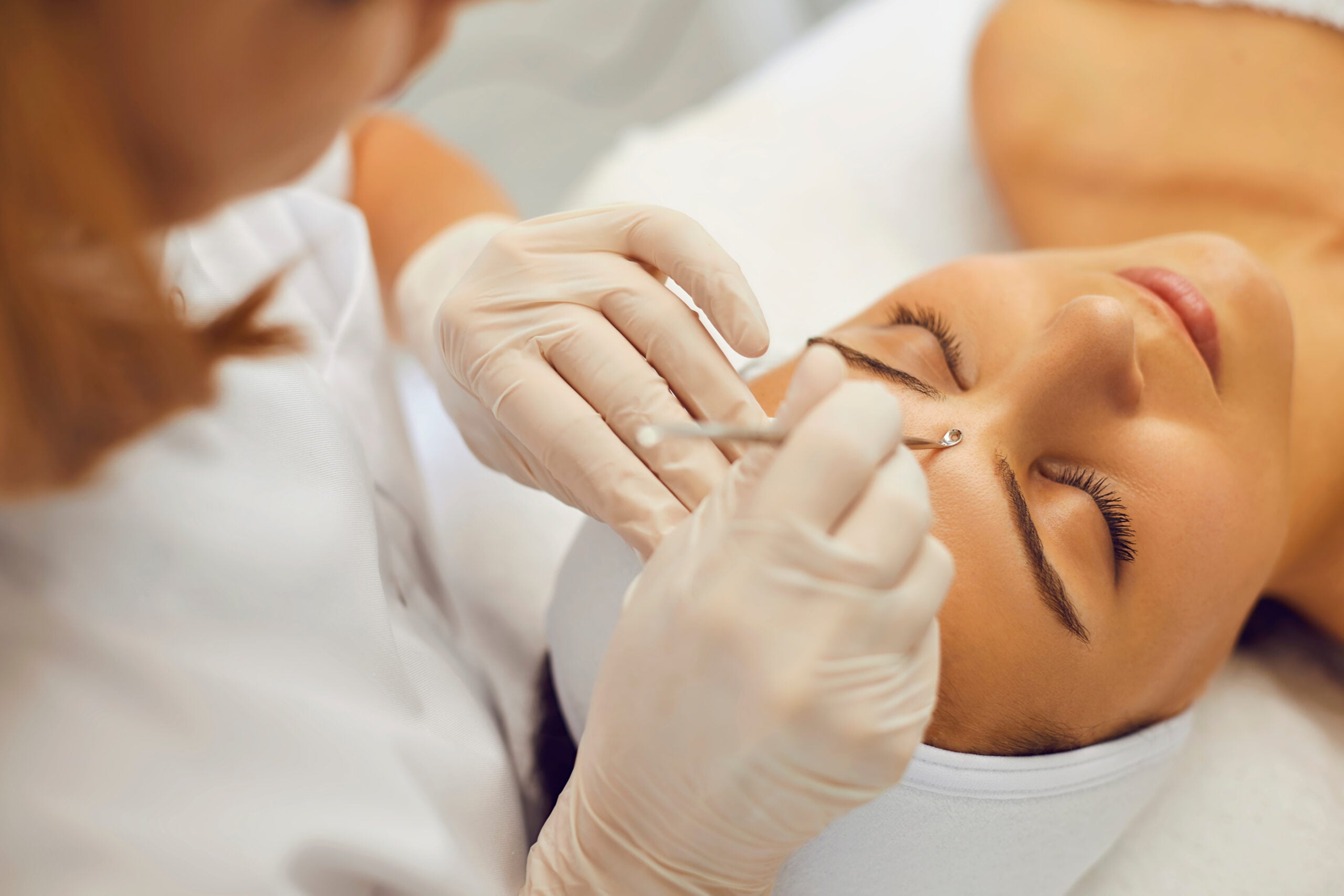
This is very different from squeezing at home. Professional removal is done with proper tools, visibility, skin prep, and technique. It’s especially important around the eyes, where the skin is thin and delicate.
Professional Skin Treatments
If milia are part of a broader pattern of dullness, buildup, rough texture, or slow turnover, treatments like customized facials, Glo2Facial, chemical peels, or medical-grade skincare may help support smoother-looking skin over time.
These treatments are not the same as removing milia, but they may be part of a plan to improve overall texture and reduce future buildup.
What Not to Do When You Have Milia
Milia can be tempting to pick at because they look small and close to the surface. Try to resist it.
Avoid:
- Digging at milia with a needle at home.
- Squeezing aggressively.
- Using harsh scrubs around the eyes.
- Stacking acids and retinoids without guidance.
- Trying to remove bumps on the eyelid yourself.
- Assuming every white bump is milia.
Picking can lead to irritation, scabbing, infection risk, pigmentation changes, or scarring. Around the eyes, the risk is even higher because the skin is so delicate.
When Should You See a Provider?
You should schedule an evaluation if the bump is near the eye, growing, painful, bleeding, crusting, inflamed, changing, or spreading. You should also get help if you have many bumps, keep getting new ones, or are not sure whether the concern is truly milia.
A professional evaluation matters because “white bump” is a description, not a diagnosis. Milia can sometimes be confused with clogged pores, syringomas, xanthelasma, sebaceous hyperplasia, acne, or other skin concerns.
Treatment Options at Kintsu MedSpa & Wellness
At Kintsu MedSpa & Wellness, your provider can evaluate the white bumps you are noticing and help determine whether they look like milia, clogged pores, texture buildup, or another concern.
Depending on your skin, your plan may include a customized facial, Glo2Facial, chemical peel, medical-grade skincare, or a referral if the bump needs medical evaluation before cosmetic treatment.
When appropriate, your provider can also guide you toward safe options for stubborn milia and help you build a routine that supports smoother, clearer-looking skin over time.
Those Tiny White Bumps Have a Name
Milia are common, usually harmless, and often mistaken for whiteheads. The key is not to force them out. Understanding what they are and why they happen can help you choose safer options, from skincare adjustments to professional treatment.
To find out whether your white bumps are milia and what treatment makes sense for your skin, book an appointment at Kintsu MedSpa & Wellness in Berkeley or Davis.