
Why Sunscreen Is the Most Important Step in Your Skincare Routine
- Sunscreen helps protect your skin from UV damage that can cause sunburn, premature aging, dark spots, uneven tone, and skin cancer risk.
- Daily broad-spectrum SPF is important even when it is cloudy, cool, or you are mostly indoors, because UV exposure adds up over time.
- The best sunscreen is the one you will actually wear consistently, which is why texture, finish, skin type, and lifestyle matter.
Why Sunscreen Matters Every Day
Sunscreen is one of the most important daily skincare steps because UV exposure adds up over time. Even small amounts of sun exposure can contribute to sunburn, dark spots, uneven tone, premature aging, and long-term skin damage.
Daily sunscreen also helps protect the results you are working toward with your skincare routine and professional treatments. If you are treating pigmentation, acne marks, melasma, fine lines, texture, or sun damage, consistent SPF helps prevent new UV damage from working against your progress.
For the best daily protection, the American Academy of Dermatology recommends using a broad-spectrum, water-resistant sunscreen with SPF 30 or higher.
What Does Sunscreen Actually Protect You From?
Sunscreen helps protect your skin from ultraviolet radiation, or UV rays. The two main types that affect your skin are UVA and UVB.
UVA rays are often associated with premature aging. They can contribute to wrinkles, age spots, uneven pigmentation, and deeper skin damage. UVA rays can also pass through window glass, which is one reason daily sunscreen matters even when you are not spending the whole day outside.
UVB rays are more closely linked to sunburn. They can also damage skin cells and contribute to skin cancer risk. A broad-spectrum sunscreen is important because it helps protect against both UVA and UVB rays, not just burning. Sunscreens that are not broad-spectrum or don’t have at least SPF 15 must carry a warning that they have only been shown to help prevent sunburn, not skin cancer or early skin aging.
The Skin Health Benefits of Wearing Sunscreen
Sunscreen supports both skin health and skin appearance, which is why it belongs in every daily skincare routine.
Wearing sunscreen consistently can help:
- Reduce sunburn risk by protecting against UVB rays.
- Help prevent premature aging, including fine lines, wrinkles, sagging, and age spots.
- Support a more even skin tone by helping prevent dark spots and pigmentation from getting worse.
- Protect treatment results after lasers, peels, microneedling, facials, and brightening skincare.
- Lower skin cancer risk when used as directed as part of a complete sun protection routine.
- Keep skin looking healthier over time by reducing repeated UV stress on the skin barrier.
What SPF Should You Use?
For daily use, choose a broad-spectrum sunscreen with SPF 30 or higher. Broad-spectrum means it helps protect against both UVA and UVB rays, while SPF 30 gives a strong daily baseline when applied correctly.
For longer outdoor days, beach days, hiking, sports, or post-treatment skin, you may want a higher SPF, such as SPF 50, along with hats, shade, and protective clothing. No sunscreen blocks 100% of UV rays, so application and reapplication matter just as much as the number on the bottle.
The best SPF is the one you will wear every day. Texture, finish, skin type, and how it layers with makeup all matter because consistency is what protects your skin long term.
How Much Sunscreen Should You Apply?
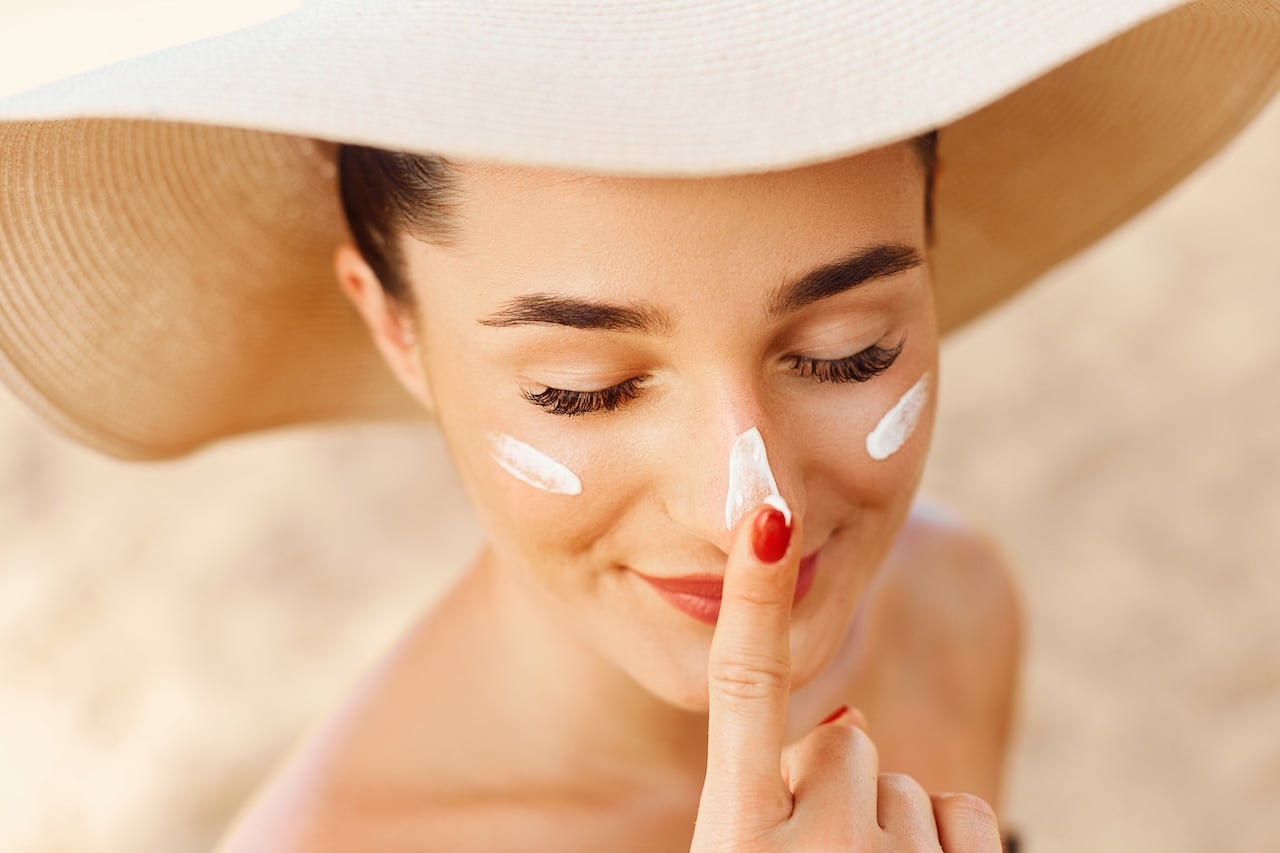
Most people do not apply enough sunscreen to get the level of protection listed on the bottle. For the face and neck, a good rule of thumb is to use about two finger lengths of sunscreen, or enough to create an even layer across your face, neck, ears, and any exposed chest.
For the body, apply sunscreen generously to all exposed skin, including areas people often miss, like the ears, hairline, back of the neck, tops of the hands, shoulders, and feet.
Reapplication matters just as much as the first layer. Reapply sunscreen every two hours when you are outdoors, and sooner after sweating, swimming, or towel drying. If you are using active skincare, treating pigmentation, or recovering from a medspa treatment, consistent application is even more important.
Mineral vs. Chemical Sunscreen
Mineral and chemical sunscreens both protect your skin from UV damage, but they use different active ingredients and can feel different on the skin. Neither is automatically better for everyone. The right choice depends on your skin type, sensitivity, finish preference, and lifestyle.
| Feature | Mineral Sunscreen | Chemical Sunscreen |
| How it works | Uses mineral filters like zinc oxide or titanium dioxide to help protect the skin from UV rays. | Uses chemical filters that absorb UV rays and convert them into heat. |
| Often best for | Sensitive skin, redness-prone skin, post-treatment skin, melasma-prone skin, and clients who prefer a physical filter. | Everyday wear, lightweight textures, deeper skin tones, makeup layering, and people who dislike heavier SPF formulas. |
| What to know | Can feel calming and protective, but some formulas may leave a white cast depending on texture and skin tone. | Often feels more sheer or invisible, but may sting sensitive or post-treatment skin for some clients. |
Common Sunscreen Mistakes
Even a great sunscreen won’t protect your skin well if it’s not used consistently or correctly. The most common sunscreen mistakes include:
- Only wearing sunscreen on sunny days. UV rays can still affect your skin when it is cloudy, cool, or overcast.
- Not applying enough product. A thin layer may not give you the protection listed on the bottle.
- Forgetting to reapply. Sunscreen wears down with time, sweat, water, and touch. Reapply every two hours outdoors.
- Skipping easy-to-miss areas. The ears, neck, chest, hairline, lips, hands, and tops of the feet are commonly forgotten.
- Relying on makeup SPF alone. Most people don’t apply enough makeup to get full SPF protection.
- Using expired sunscreen. Expired sunscreen may not protect your skin as well.
- Skipping sunscreen after treatments. Lasers, peels, microneedling, and brightening skincare can make your skin more vulnerable to UV damage.
- Thinking deeper skin tones don’t need sunscreen. Every skin tone can experience UV damage, pigmentation, premature aging, and skin cancer risk.
Sunscreen Is Skincare, Not Just Sun Protection
Sunscreen is the daily step that helps protect everything you are doing for your skin. It supports a brighter, more even-looking complexion, helps prevent new sun damage, and protects the results of treatments like lasers, peels, microneedling, facials, and brightening skincare.
The right sunscreen should feel good enough to wear every day, which is why texture, finish, skin type, and lifestyle matter. Whether you prefer a mineral formula, a lightweight chemical sunscreen, or something that layers beautifully under makeup, consistency is what makes SPF work.
Ask the Kintsu team which SPF best fits your skin type, routine, and treatment plan, and stay tuned for our upcoming sunscreen comparison guide.