
How to Tighten Loose Skin after GLP-1 Weight Loss
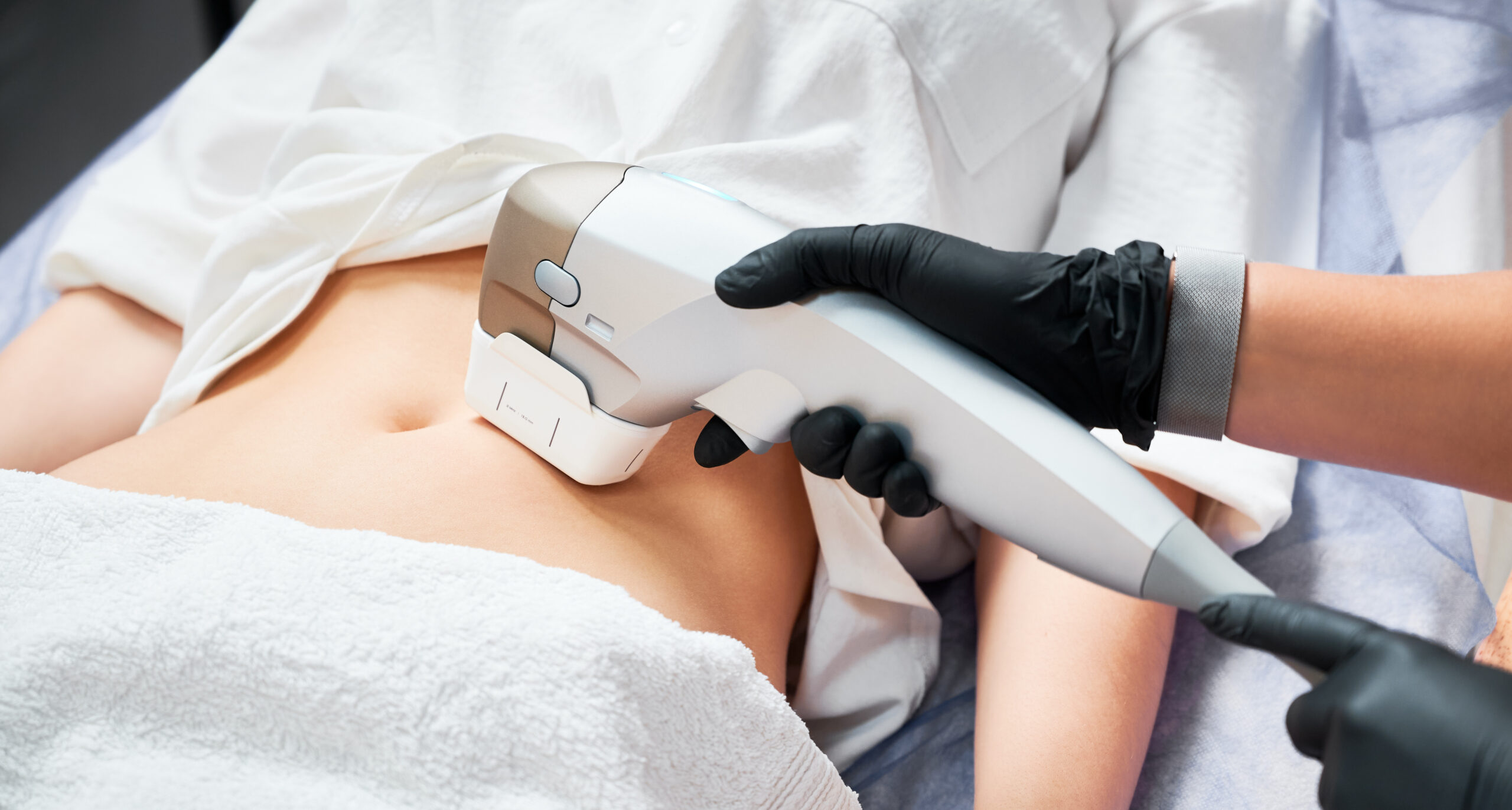
- Mild to moderate loose skin may improve with collagen-stimulating treatments like Sofwave, Vivace RF microneedling, or Fotona.
- If facial volume loss is part of the problem, Sculptra or filler may help restore support.
- Significant excess skin usually needs surgical evaluation rather than nonsurgical tightening alone.
Why Can Loose Skin Appear After GLP-1 Weight Loss?
Loose skin can become more noticeable after GLP-1 weight loss because the skin loses some of the fat and volume that previously supported it. How well the skin contracts afterward depends on factors like age, genetics, weight loss, and baseline skin elasticity.
GLP-1 medications can produce significant weight loss. In the STEP 1 trial, adults taking 2.4 mg of semaglutide lost an average of 14.9% of their body weight over 68 weeks, compared with 2.4% in the placebo group.
As fat decreases, the skin has less volume underneath it. Sometimes the skin adjusts well. Other times it doesn’t contract enough to fully match the new shape of the face or body.
Someone who loses 20 pounds may have a very different experience from someone who loses 70. Age, genetics, sun exposure, previous weight changes, and skin quality all influence how much laxity remains.
Collagen and elastin matter too. They give skin much of its strength and ability to bounce back. Research examining skin after major bariatric weight loss has found changes in both collagen and elastic fibers. That research was not conducted specifically in GLP-1 patients, but it helps explain why skin may feel thinner or less resilient after a large change in body size.
What Happens to Your Face After Significant Weight Loss?
Significant weight loss can reduce some of the fat that supports the cheeks, temples, midface, and jawline. This can make the face look more hollow, less defined, or slightly looser even when the skin itself is healthy.
Your face contains several layers of fat that help create shape and support. As you lose weight, some of that facial volume can decrease along with fat elsewhere in your body.
A 2025 imaging study looked at people taking GLP-1 medications who had CT or MRI scans before and after treatment. Researchers found a median 9% decrease in total midfacial volume, with much of the change occurring in superficial fat. Greater overall weight loss was also linked with greater superficial facial volume loss.
As a result, you may notice flatter cheeks, more visible folds, hollowing around the temples, or less definition along the jawline.
This is often what people mean when they use the term Ozempic face. It’s not a medical diagnosis, and it doesn’t mean Ozempic is directly damaging or aging the face. In many cases, what you are seeing is simply the facial side of significant weight loss.
Will Loose Skin Tighten on Its Own?
Mild loose skin may improve as your weight stabilizes and your skin has time to adjust. More significant laxity may not fully resolve on its own, especially after larger amounts of weight loss.
If you are still actively losing weight, your face and body are still changing. Giving your skin some time can make it easier to see what will improve naturally and what may need extra support.
Age, the amount of weight lost, how long the skin was stretched, and the condition of your collagen and elastin all play a role. Structural changes in these fibers can remain even after the weight is gone.
Creams, supplements, exercise, and time can all support healthy skin, but they cannot guarantee that significant excess skin will disappear.
Is It Loose Skin or Lost Volume?
Loose skin and volume loss can look surprisingly similar, but they need different treatment approaches. Skin tightening works best when laxity is the main concern, while volume restoration may make more sense when the face has lost underlying support.
This is one of the most useful distinctions to make before choosing a treatment.
| What You Notice | What May Be Going On | What You May Need |
| Crepey or mildly loose skin | Reduced elasticity and support | Collagen stimulation and tightening |
| Hollow cheeks or temples | Loss of facial volume | Strategic volume restoration |
| A softer jawline | Laxity, volume loss, or both | Tightening, support, or a combination |
| Texture changes with mild laxity | Changes in collagen and skin quality | Collagen remodeling and resurfacing |
| Significant hanging skin | More excess skin than a device can contract | Surgical evaluation |
Which Treatments Can Help After GLP-1 Weight Loss?
At Kintsu MedSpa & Wellness, we offer several treatments that can address mild to moderate skin laxity, collagen loss, texture changes, and facial volume changes after weight loss. The best option depends on whether your main concern is firmness, support, skin quality, or a combination.
There is no single treatment for post-GLP-1 skin changes. We choose the approach based on what your face or body actually needs.
Sofwave for Skin Laxity
If the skin still has good structure but looks looser around the jawline, lower face, neck, or under the chin, Sofwave may be a good fit.
Sofwave uses ultrasound energy within the skin to encourage collagen remodeling without surgery. Kintsu uses it for areas including the face, jawline, neck, and under the chin.
Clinical research on this type of technology has found improvement in lower-face laxity after treatment. The research was not conducted specifically in people taking GLP-1 medications, but it supports ultrasound treatment for mild to moderate skin laxity.
Sculptra for Lost Support and Collagen
Sometimes the problem is not just the skin. Weight loss may also reduce some of the facial volume that gives the cheeks and midface their shape.
Sculptra contains poly-L-lactic acid and works gradually by stimulating collagen while helping restore facial support. We use it when patients want a subtle, progressive approach to facial volume changes.
Research in this area is beginning to include GLP-1 patients. A 2026 study evaluated poly-L-lactic acid combined with hyaluronic acid filler in people who experienced facial changes after GLP-1-related weight loss. Researchers reported improvements in facial contour and skin quality. Because the treatments were combined, we can’t say Sculptra alone created those results, but the study supports a layered approach to post-weight-loss facial changes.
Vivace RF Microneedling for Texture and Firmness
Some people don’t have dramatic sagging. Instead, the skin looks thinner, less firm, or more textured after weight loss.
Vivace RF microneedling combines microneedling with radiofrequency energy to encourage collagen remodeling while also improving texture and fine lines.
Research on fractional RF microneedling has shown improvement in mild to moderate neck laxity, making it a useful option when firmness and skin quality are both concerns.
Fotona Laser for Facial and Body Tightening
Post-weight-loss changes are not limited to the face. We offer Fotona treatments for facial, neck, and body tightening. Fotona uses laser energy to encourage collagen remodeling and improve firmness, making it worth considering when mild laxity is the main concern.
It can be especially useful when the goal is gradual tightening rather than removing excess skin.
When Nonsurgical Tightening Is Not Enough
Nonsurgical treatments can improve mild to moderate laxity, collagen quality, and facial support. However, they can’t physically remove a large amount of loose or hanging skin.
If you have significant excess skin around the abdomen, arms, thighs, chest, or another area after major weight loss, a consultation with a board-certified plastic surgeon may be more appropriate.
When Should You Start Thinking About Treatment?
You can start discussing treatment at any point in your weight-loss journey, but it may make sense to wait if your weight is still changing quickly. A more stable weight gives you and your provider a clearer picture of which concerns are likely to remain.
There is no universal rule that says everyone needs to wait a specific number of months after GLP-1 weight loss.
Someone with mild skin-quality changes may decide to start treatment sooner. Others experiencing rapid weight loss or major changes in facial volume may benefit from waiting and reassessing once things begin to settle.
The timing should fit your body, your health, and your goals.
Supporting Your Skin During GLP-1 Weight Loss
Skin treatments are only one part of the picture.
Adequate nutrition, enough protein for your individual needs, resistance training when appropriate, daily sun protection, and regular follow-up with the clinician managing your GLP-1 medication can all support your overall health while your body changes.
These habits can’t erase significant excess skin. What they can do is support the muscle, skin, and body composition underneath the aesthetic results you are trying to maintain.
Build Your Post-GLP-1 Skin Plan Around What Actually Changed
After significant weight loss, it’s easy to look in the mirror and label every new change as loose skin. Often, it is more nuanced. You may have less facial volume, mild skin laxity, changes in texture, or a combination of all three.
At Kintsu MedSpa & Wellness, we start by looking at what has actually changed before recommending treatment. Depending on your skin, goals, and stage in your weight-loss journey, that might mean Sofwave, Sculptra, Vivace RF microneedling, Fotona, strategic volume restoration, or simply giving your body more time.
Book an appointment in Berkeley or Davis to build a thoughtful post-weight-loss treatment plan around you.