
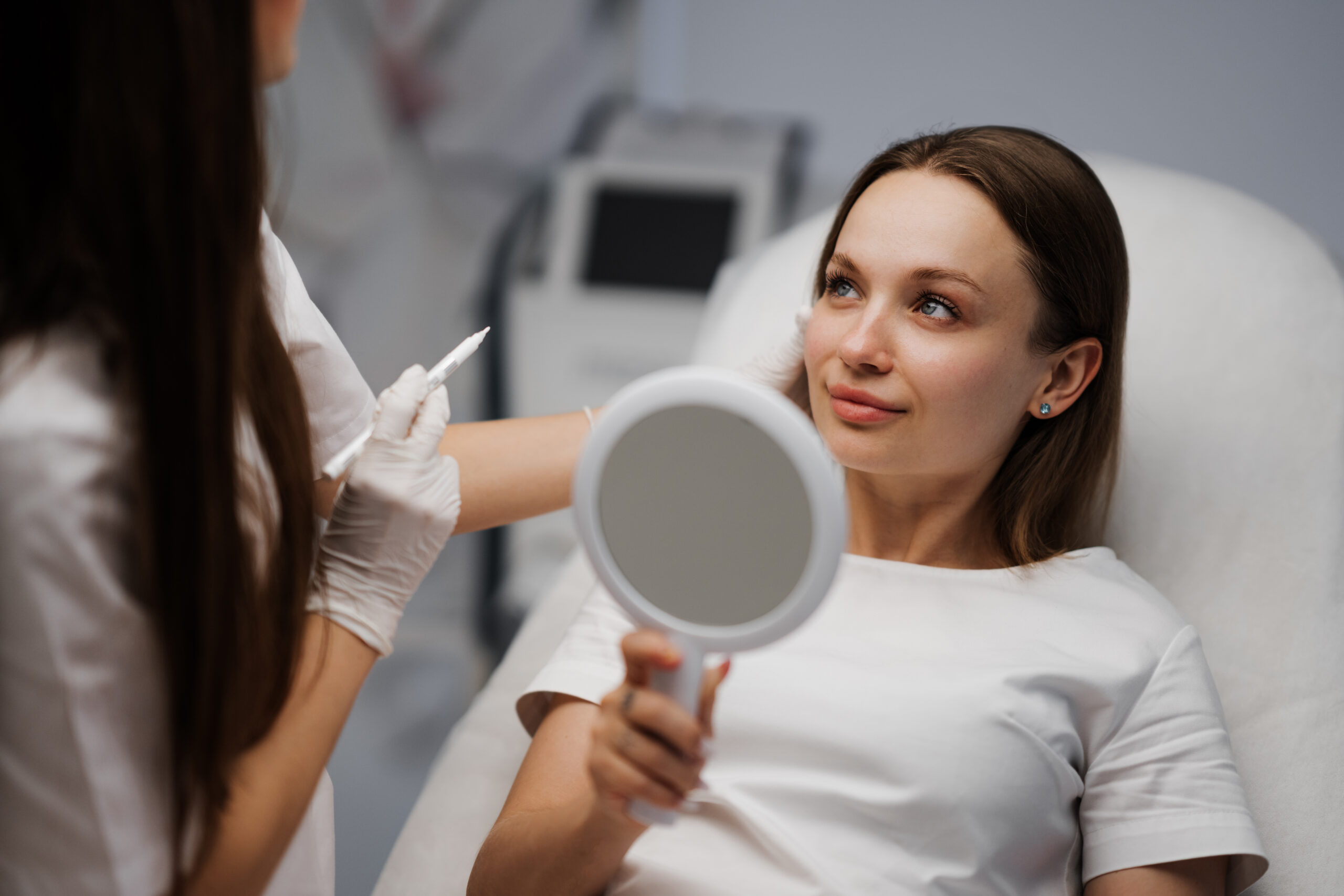
How to Get Natural-Looking Aesthetic Results Without Looking Overdone
- Choose treatments based on what is actually changing, whether that is muscle movement, volume loss, skin laxity, or collagen decline.
- Use conservative, well-placed Botox or filler rather than treating every line or adding volume where it is not needed.
- Build a personalized plan that may combine Botox, Juvéderm, Sculptra, Sofwave, or other collagen-stimulating treatments while preserving your natural movement and proportions.
What Does Natural-Looking Aesthetic Treatment Actually Mean?
A natural result should still look like you. Your expressions, proportions, and recognizable features remain intact while the areas bothering you look softer, healthier, or better supported.
That idea is becoming increasingly important in 2026. Patients are moving away from overfilled or frozen results and toward healthier skin, subtle movement, collagen stimulation, and personalized treatment plans.
Natural also means more than looking good in a still photo.
A 2026 international consensus on natural outcomes with hyaluronic acid fillers proposed looking at how a result appears, feels, integrates into the tissue, and moves during facial expression. The panel emphasized individualized treatment and preserving a person’s unique features.
In other words, a natural result should work when you smile and talk, not just when your face is still.
Why Do Some Aesthetic Treatments Look Overdone?
The “done” look usually has less to do with whether someone chose Botox or filler and more to do with how much was used, where it was placed, and whether the treatment suited that person’s anatomy.
More treatment is not automatically better treatment.
A face can begin to look unnatural when every line is treated aggressively, unnecessary volume is added, facial proportions are ignored, or the same injection pattern is used for everyone.
Natural-looking aesthetics takes the opposite approach. The goal is to identify what is creating the concern and make the smallest effective change rather than treating every possible area.
Sometimes that also means leaving an area alone.
Can Botox Look Natural?
Yes. Natural-looking Botox should soften unwanted expression lines while preserving enough movement for your face to remain expressive. The right dose and placement matter more than trying to eliminate every wrinkle.
Botox and Dysport temporarily reduce activity in selected facial muscles. That doesn’t mean the goal needs to be a completely still forehead.
Facial muscles vary in strength, position, and movement from person to person. A 2025 study of an anatomically guided botulinum toxin technique found strong aesthetic outcomes and highlighted the value of individualizing treatment around a patient’s muscle dynamics.
At Kintsu MedSpa & Wellness, Botox and Dysport treatments are approached with those individual differences in mind. Someone who wants to preserve more forehead movement may need a different plan from someone primarily concerned with deeper frown lines.
Can Dermal Fillers Look Natural?
Absolutely. Natural-looking fillers focus on restoring or refining volume where it is actually needed rather than adding volume simply because an area can be injected.
Hyaluronic acid fillers like Juvéderm can be used for precise changes in your lips, cheeks, or lower face.
Placement is important because facial balance is three-dimensional. Adding more volume to one feature can change how surrounding features appear, which is why treating isolated areas without considering the whole face can sometimes produce an obvious result.
Natural movement can still be preserved with filler when treatment is planned carefully. In a study of 63 people treated with HA filler in the lower face, at least 98% maintained or improved the natural appearance of their facial expressions at six months.
Where Does Sculptra Fit Into a Natural Aesthetic Plan?
Sculptra can be useful when the goal is gradual, broader support rather than immediately adding volume to one specific feature.
Sculptra at Kintsu MedSpa & Wellness uses poly-L-lactic acid to stimulate collagen production over time.
That makes the experience different from traditional HA filler. Someone wanting precise lip enhancement may be better suited to Juvéderm, while someone noticing more generalized loss of facial support may benefit from discussing Sculptra.
Because collagen production takes time, the result develops gradually rather than appearing all at once. For patients concerned about looking suddenly or noticeably different, that slower progression can be appealing.
The important part is still treatment selection. Sculptra is not automatically more natural than filler. It simply solves a different problem.
Can You Look More Refreshed Without Adding Volume?
Yes. Not every change associated with aging comes from volume loss. If skin laxity or declining firmness is the bigger concern, stimulating collagen may make more sense than adding filler.
This is where a treatment like Sofwave can fit into a natural-looking plan.
Sofwave uses ultrasound energy to heat targeted tissue and stimulate collagen remodeling without adding facial volume. A small clinical study involving 15 participants found improvement in treated areas of facial laxity after treatment, although the limited study size is worth keeping in perspective.
This is an important distinction for someone who says, “I don’t want filler.”
We can usually address the concern better through skin tightening, collagen stimulation, or another approach that doesn’t change facial volume.
Why Does Personalized Treatment Planning Matter So Much?
Wrinkles, volume loss, laxity, and changes in skin quality are different problems. Natural-looking results come from identifying what is actually causing the concern before deciding how to treat it.
A personalized plan might use Botox or Dysport to soften expression lines while preserving movement. A small amount of Juvéderm might restore volume in one specific area. Sculptra may make more sense for broader support, while Sofwave could address mild laxity without adding volume.
And some areas may not need treatment at all.
That last part matters.
A good consultation should begin with what you notice, what you want to preserve, and what would create the most meaningful change.
That philosophy is also at the center of Kintsu MedSpa & Wellness’s approach to natural-looking aesthetic medicine.
What Should You Tell Your Injector If You Don’t Want to Look Done?
Be specific about what “natural” means to you. Tell your provider what you want to preserve, not only what you want to change.
You might say that you still want your eyebrows and forehead to move, that you want your lips to remain proportional to your face, or that you would rather make gradual changes than treat multiple areas at once.
It is also reasonable to say that you want your provider to tell you when something does not need treatment.
Photos of yourself from several years ago can sometimes be more helpful than bringing in a celebrity reference. They give your provider a sense of your own facial proportions and how they have changed.
The Best Result Should Still Look Like You
Looking refreshed without looking “done” comes down to restraint, precise treatment planning, and knowing when not to add more.
Your face should still move. Your proportions should still feel like yours. And not every concern needs to be corrected at once.
At Kintsu MedSpa & Wellness, treatment planning starts with your anatomy, priorities, and comfort level rather than a preset package.
Book an appointment at Kintsu MedSpa & Wellness in Berkeley or Davis to create a personalized aesthetic plan designed around results that still look like you.